Deja Vu at School: Let's Ban Something, Again.
Compliance culture isn’t good for youth development


Watching schools move toward widespread smartphone bans (and AI bans, edtech bans, and playground bans on playing tag or baseball during recess) feels strangely familiar. Nothing new. Hardly innovative. Not even particularly thoughtful or evidence-based. Just familiar. Another cycle in a long tradition of adult anxiety being projected onto young people and their gadgets.
We’ve done this before. Repeatedly. I’ve written previously about pinball bans and the kaleidoscope craze in 1818.
Every generation identifies a new “threat” to youth development and treats it as the root of moral, cognitive, and emotional decline. Radios. Comic books. Calculators. The Walkman. Pagers. Cell phones. Now smartphones. The pattern never changes.

And each time, we tell ourselves the same story: If we just remove the object, the problem will go away.
We tell ourselves this is all about mental health, education outcomes, bullying, concentration, fragility, anxiety, or loneliness. After all, we have to do something if we’re living with The Anxious Generation, right?
Modern Times & the Good Old Days
There is nothing new about being concerned about “modern times” and longing for the “good old days.” Kurt Hahn, co-founder of Outward Bound, was very concerned about kids becoming out of shape because of “advanced locomotion.” It was the 1930s. This was only 30 years after the Great Horse Manure Crisis, where there were so many horses and their poop in every “modern” city that urban city planners believed this was the end of “modern” civilization.
The problem is, we always live in “modern times,” and construct a nostalgia bias about those “good old days” that never really existed.
In the 1930s and 40s, radios were framed as propaganda machines that would rot young minds, replace real dialogue, and destabilize values. In the 1950s, comic books were blamed for juvenile delinquency and moral decay, sparking bans, burnings, and legislation. In the 60s and 70s, calculators were treated as cognitive shortcuts that would “destroy thinking.” Math teachers protested in the streets. In the 80s and 90s, pagers and early cell phones and pagers were labeled criminal tools and banned across school districts.
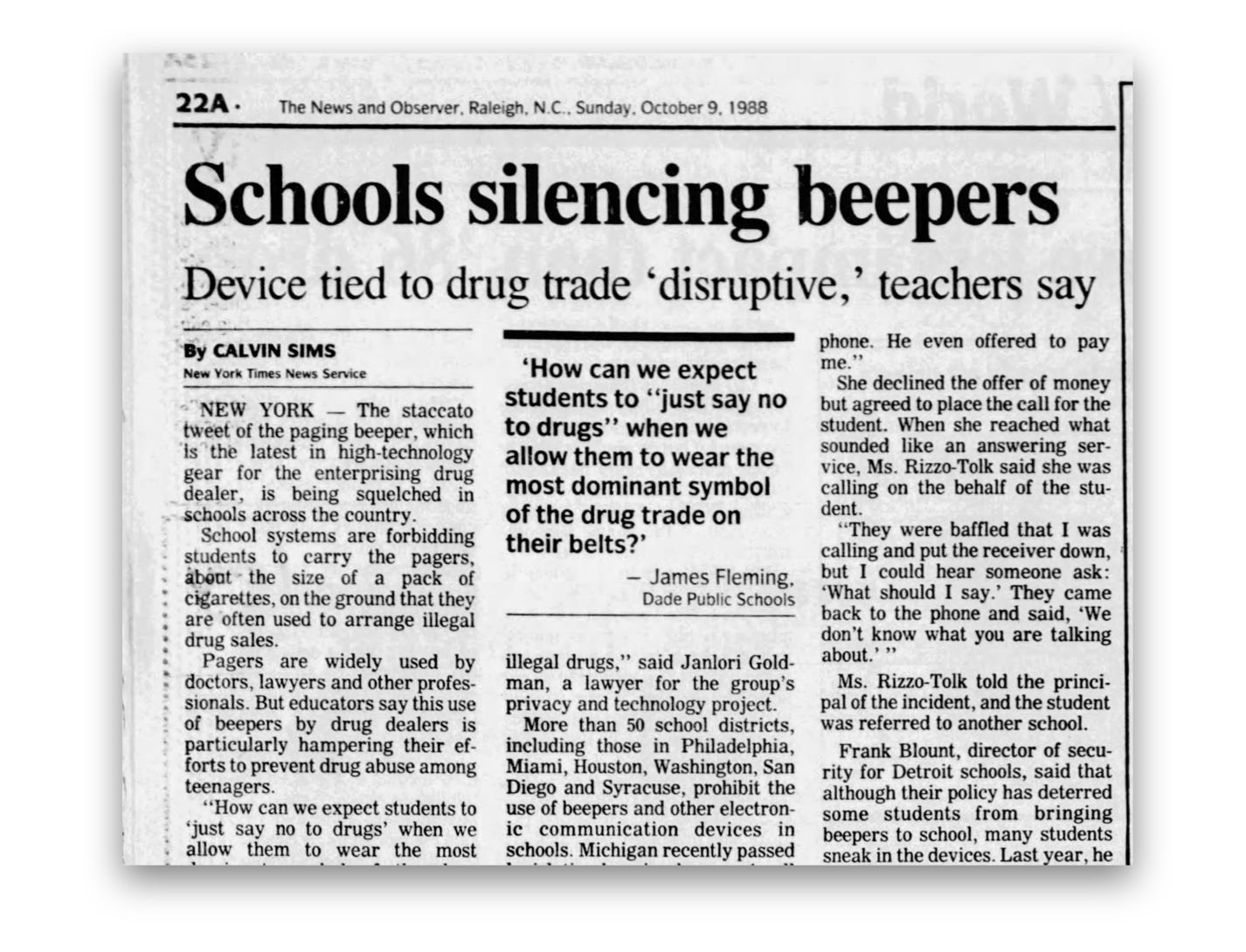
Each wave carries the same emotional logic: fear, loss of control, moral panic, and a deep mistrust of youth.
And now we’re here again.
The problem is not that phones can be distracting. Of course they can. The problem is the psychological shortcut we keep taking.
In Kids These Days, I argued that adolescent well-being doesn’t come from isolation, restriction, or protectionism. Rather, it comes from connection, belonging, participation, and meaning. These are psychological needs — not technological ones.
An Uncomfortable Truth
I’m not convinced the “crisis” we’re seeing in youth mental health is caused by devices. It starts with an uncomfortable truth. Many concerns regarding mental and behavioral health start at home and in school. I want to stick with schooling for a second, and before I do, I want to stress that I have nothing bad to say about education, no matter how one goes about it.
I’m talking about schooling.
The modern education system is designed for compliance, fragmentation, and dependency. I joked recently about the absurdity of using the word 'compliance’ when talking about teenagers. We should be striving for an environment full of curiosity, autonomy, and meaning.
Renowned advocate for school reform, John Taylor Gatto, argued that the schooling system doesn’t primarily cultivate thinkers; rather, it conditions behavior. They separate learning from purpose, community, and lived experience, replacing organic human development with bells, schedules, rankings, surveillance, and control. Of course, in this world, anything that disrupts a sense of compliance, like the Walkman, comic books, or pinball, requires immediate banning.

From Gatto’s lens, increasing rates of student distress are anything but surprising. It’s a predictable outcome of institutional design. Anxiety, disengagement, boredom, and alienation aren’t failures of children; they’re symptoms of a system that trains passivity while calling it education. When kids seek refuge in phones, they’re not escaping learning. They’re escaping environments that feel psychologically empty, coercive, and disconnected from real life. As Martin Brokenleg and Mari Swingle said to us in Kids These Days, if you’re starving for connection, you’ll gorge on anything you can find.
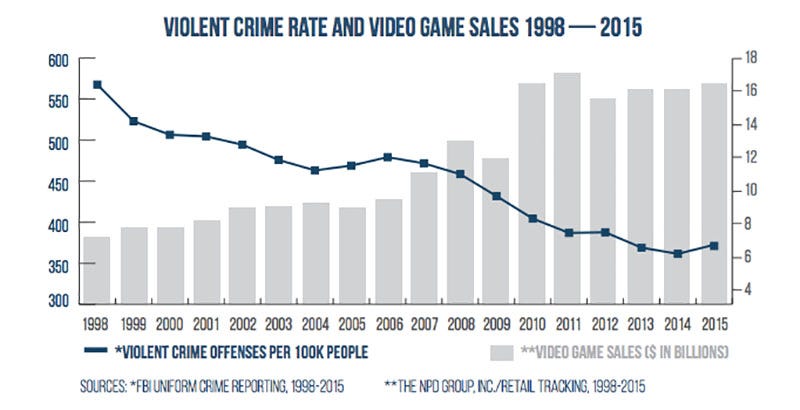
And banning phones becomes the perfect illusion of reform. Just like when we banned pinball for 30 years in the 1940s! Or when we called for the ban of violent video games.
Update: Video games are more violent than ever and are being sold more widely. Youth crime has gone down.
Last year’s sensationalism about social media and smartphones led to legislation and new school policies, despite calls from human rights organizations to use caution when banning any form of communication or access to information. The whole movement gives adults something visible to blame and something simple to control, without requiring any structural change.
It allows the schooling system to avoid confronting harder truths that many classrooms feel irrelevant, dehumanizing, and emotionally unsafe; that students lack agency, voice, and ownership over their learning; that the system prioritizes order over meaning and compliance over curiosity. We find psychological comfort in banning phones (and school radio, comic books, progressive textbooks, and risky play) because it lets us pretend the problem is anything but institutional. We protect the legitimacy of a broken model by scapegoating any new (and progressive) development.
In that sense, phone bans aren’t about mental health. They’re about preserving a system that no longer knows how to justify itself. Bans offer symbolic action, control rather than transformation, and discipline rather than redesign. Regarding discipline, Christopher J Ferguson, Ph.D. found school suspensions and referrals to mental health services increased after Florida’s widespread phone bans. It’s easier to confiscate devices than to reimagine schooling itself — and that’s precisely why we keep doing it.
Bans create the illusion of action. They feel decisive. Clean. Simple. Politically satisfying. But psychologically, they’re shallow. They don’t teach regulation, literacy, boundaries, or self-trust. They teach compliance and avoidance.
And avoidance has never built resilience.
Adults have to do the work. To be the adults in the room. But that’s much harder than banning phones — which is probably why we keep choosing to ban things.
Yep. Very frustrating. Schools are slow to adapt but are more likely to pick up new trends that ‘look good’ despite the lack of evidence to support them. When they do follow ‘evidence’ they can be selective with
what they do and do not support.
AMEN