Rethinking How We Talk About (& With) Young People
From problem-saturated narratives to solution talk, outdoor therapy, and the quiet discipline of noticing what is already working.

Over the years, I’ve worked with a lot of teens who arrived carrying the weight of a very thick file. The phone rings with a saturated, problem-laden narrative about what’s going wrong. The language is often quite familiar: “severe anxiety,” “school refusal,” “anger management issues,” “substance abuse,” escalating concerns, stories from failed interventions, and nothing previously attempted has worked.
Some clients come with pages and pages detailing what was wrong with the child, what professionals were worried about, and everything the teen supposedly couldn’t do.
“Why am I even bothering to read this shit?” I often wondered about some young people with fat file syndrome.
About a decade ago, I worked with one of the most troubling cases in South Australia. The child’s life was put entirely in the public view after a government inquiry into the child protection system, which, yes, failed terribly.
Removed from his parents at two, this child was the beneficiary of change after change in state government leadership and a lot of bad practice. For example, one worker - a qualified and licensed graduate and member of his required professional association - cut the heads off the child’s teddy bears when the child misbehaved on an Easter long weekend.
At one point, when attachment therapy was really growing in popularity, the government thought to give the then 12-year-old a wing of the hospital to live by himself in isolation. After all, if he didn’t want to attach because of his diagnosed reactive attachment disorder, then maybe dangling care and attachment like a carrot on a stick would work.
It didn’t.
All the qualifications, experts, and theoretical ideas in the world, and no good outcome. What gives?
The psychologist who oversaw this child’s government-dictated life called me to say that whatever we did wouldn’t work. This motivated my friends (educators, youth workers, and nice people) and me, and we built an amazing team around him.
I was to do the outdoor therapy stuff. I asked the then-18-year-old what he wanted to do, and he said he wanted to be like Bear Grylls. Cool!
“He won’t get in the car with you,” the psychologist said over the phone. “It will trigger his trauma.”
He, however, came to our next session with a printed Google Maps route to the hike he wanted to take. A piece of nearby nature where he had hiked with a youth worker as a pre-teen.
For months, we enjoyed many micro-adventures. He attended this alternative school every day and actually gained some school credit. He interacted with adults and fellow students. Everything was going well.
My frustration with the system and the psychologist grew.
Their favorite words were: can’ts, don’ts, and won’ts.
Wherever a possibility or “experiment” was put on the table, it was shut down.
Note: This story ended terribly. And frustratingly, with courts and more government intervention. As we left the courtroom on our last meeting, the psychologist actually said to me, “I told you this wouldn’t work.”
I was heartbroken. Not only for this young person, who my heart still aches for, but also for how we live in a world surrounded by problem talk.
Discovering “Solution-Something”
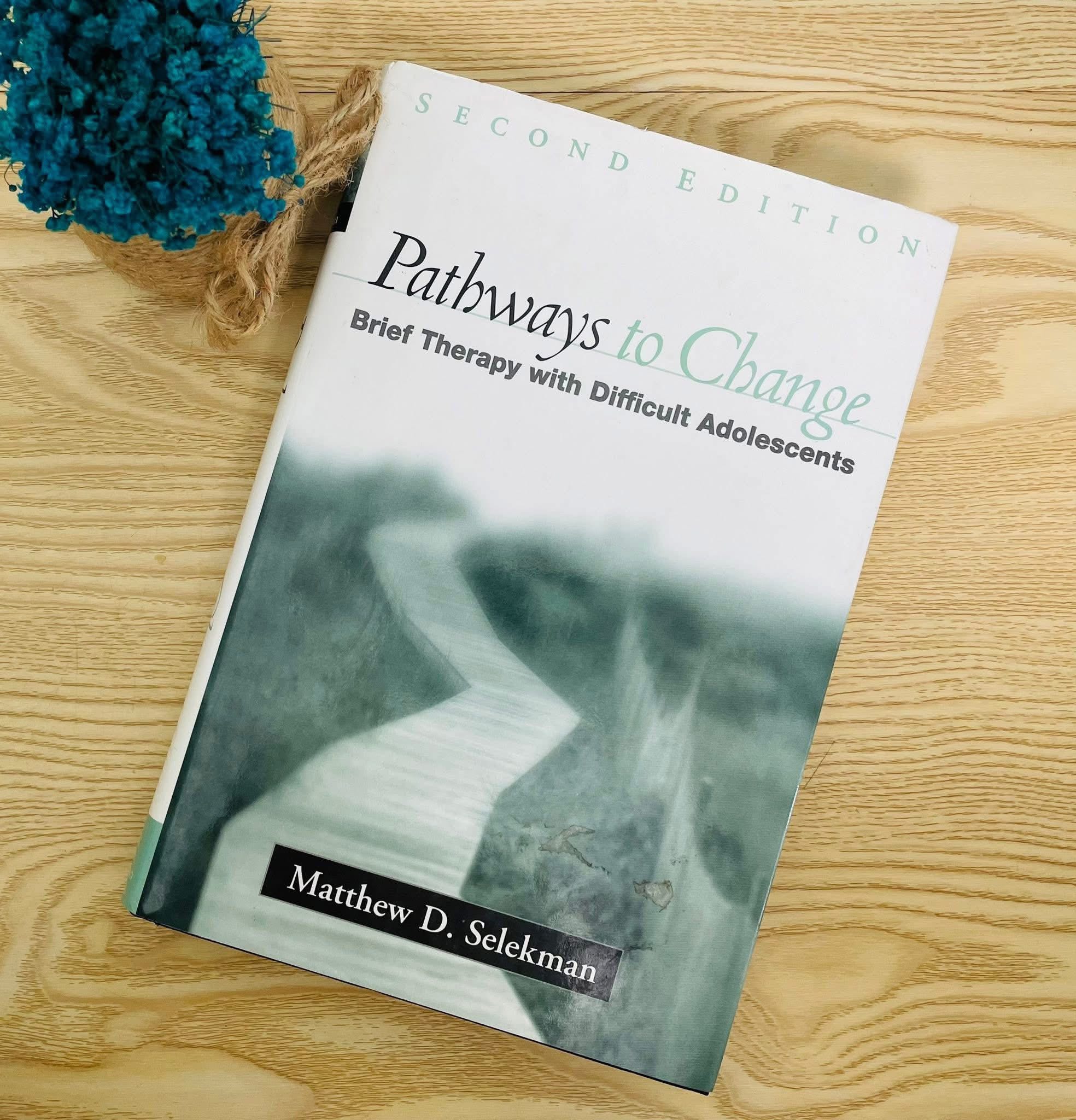
In 2008, I attended a National Association of Social Workers full-day training delivered by Matthew Selekman. At the time, my boss offered to pay for my attendance, and it blew my mind. I was a social work student in my early 20s, and everything Matthew articulated felt like he was conveying a language for how I felt about the therapy I wanted to do. He called it solution… uh… something.
I say “something” because it’s stupidly contentious in our community about what is solution-focused or solution-oriented or…who cares! What I learned from Matthew Selekman blew my mind.
On a funny side note, after the training in Baltimore, Maryland, was completed, I saw my new idealized guru at a bus stop and offered to drive him to BWI. Matthew Selekman accepted. That might be the most impactful 30-minute drive of my life! My hero of one day in the car with me. Which, yes, had a cracked windshield, a headlamp dangling from the rearview mirror, and bags and bags of caving and climbing equipment.
That day was a definitive directional shift in my view of psychotherapy and mental health.
I made notes of a few of the assumptions he taught me:
There is no such thing as an unmotivated client.
Resistance is not a useful concept.
Change is inevitable.
Stay future-focused.
There are always exceptions to problems.
Get creative and use adaptable therapeutic “experiments.”
That was the essence of solution talk.
Becoming Experts in What’s Wrong
I return repeatedly to a deceptively simple distinction: problem talk tends to keep problems alive, whereas solution talk helps illuminate existing strengths, capacities, and possibilities for movement. We’re painting a picture of someone who is on the move. Working through something. They aren’t that something.
Problem talk becomes so seductive because it sounds responsible. It sounds clinical and makes us feel smarter. It gives us a sense of expert-itis. That is also true with the seductive allure of neuroscience explanations.
We ask young people to recount symptoms, incidents, setbacks, diagnoses, behavioral concerns, and failures in exquisite detail. We construct elaborate understandings of pathology. We create intervention plans, behavior charts, referral pathways, risk assessments, and monitoring systems. And then we wonder why so many young people don’t come back?
Below is a brief clip from a recent keynote I delivered in Queensland.
To be clear, this is not about denying distress. That would never be a therapist’s or caretaker’s job. Young people today are navigating genuinely complex pressures: social, academic, relational, and economic. Many classrooms and family systems are stretched thin. The struggle is real.
So why, I kept asking, do we keep focusing on what is not working, instead of doing more of what works? Or at least, working with people’s durabilities?
Our professional language has become so saturated with deficit-based narratives that we unintentionally train everyone involved to become experts in what is wrong. The conversation narrows. Possibility shrinks. Hope becomes harder to locate.
Consider 70% of young people in the United States saying that their mental health label is an important part of their identity. That feels so narrow to me, and I’m not claiming I would argue with how someone wants to identify, but I definitely want to know more.
Are you always depressed?
Are there times when you were able to resist the urge to self-harm?
When was the last time you and whoever had a nice time together?
There are clues available to some of these questions.
Focusing relentlessly on problems often generates more problem talk, which in turn strengthens the problem-saturated story.
The Quiet Discipline of Curiosity
Solution talk offers a different orientation. And no, I’m not claiming that if everyone became oriented towards solutions or a hopeful future, then it would become the panacea to worsening or flatlining mental health concerns.
It is not naïve optimism. It is not “positive thinking.” And it is certainly not about handing young people another worksheet camouflaged as empowerment. Rather, it is a disciplined curiosity about moments of competence, however small or fleeting they may appear.
“When has this been even slightly more manageable?”
“What was different then?”
“How did you keep yourself going?”
“What would tell you things were moving in the right direction?”
"What’s gotten better since the last time I saw you?”
These are not inconsequential questions. They reposition young people and adults as active participants in change rather than passive recipients of intervention.
Working on What Works (WOWW)
One of the clearest examples of this within educational settings was the Working on What Works (WOWW) program, developed by Insoo Kim Berg and Lee Shilts.
What makes WOWW so compelling is that it did not operate as another deficit-focused behavior management system targeting “difficult students.” WOWW attempted to shift the classroom's ecology by systematically noticing what was already functioning well.
In the early phase, an observer enters the classroom not to identify disruption, but to notice competence, cooperation, effort, persistence, humor, attentiveness, and small acts of success. Students and teachers then receive specific, genuine feedback about what is working. No over-analysis. No moralizing. Just careful observation of effective behaviors and interactions.
Then, students and educators work together to foster and cultivate more of what works. The class collaboratively identifies goals focused on what they want more of, not less. More collaboration. Smoother transitions. More mutual support. More engagement. The emphasis remains future-oriented and relational rather than punitive and focused solely on a youth’s compliance with the school system.
Eventually, the classroom begins to track progress itself, celebrating progress and refining goals along the way. The observer becomes less and less important. Throughout the process, the central question remains consistent: how do we do more of what already works?
The Heroism of Youth
In many ways, this mirrors what happens naturally when we give young people meaningful things to do. Like many of you, I’ve observed this in my work in the outdoors. A young person who supposedly “can’t manage conflict” successfully negotiates a disagreement over cooking duties around the campfire. A student labeled “oppositional” demonstrates remarkable leadership during a challenging hike. Instead of dissecting pathology, we become curious about competence.
“How did you pull that off?”
“What helped?”
“How do we create more opportunities for that version of you to emerge?”
The solution is often already present in fragments within the young person’s lived experience. We can always go digging for what’s wrong with people, but digging for what’s already working requires discipline, if not more effort.
I have argued that contemporary systems of care have increasingly defaulted to compliance, diagnosis, and the pathologization of human struggle and distress. Despite the growing number of interventions, labels, and services, population-level outcomes have not improved as many hoped. In some cases, we may actually be undermining what’s going really well by constantly communicating fragility.
The alternative is not less care. It is smarter care.
Care that creates conditions where young people can experience themselves as capable contributors to their own lives. The heroism of youth.
Sometimes practitioners worry that a focus on solutions somehow “ignores the problem,” or is way too surface-level to count as real psychotherapy…whatever that is. I talked about my training in solution-focused therapy in the first chapter of my dissertation, and one reviewer remarked that solution-focused work only leads to Level 1 change. To be honest, what a silly thing to say. I had never heard of Level 1, or 2, or 3 change. What is it?
And nowhere did I say it was better than anything else.
Endless problem analysis risks deepening hopelessness, framing difficulties as fixed and enduring. As a part of one’s identity. Solution talk attempts to expand possibilities by inviting people to notice exceptions, movement, and agency.
So here is the invitation.
Pay attention to language. Notice how often conversations revolve around deficits, risks, symptoms, or behavioral concerns. Ask about a moment that went slightly better. Notice effort instead of only disruption. Offer a genuine observation about competence. Create opportunities for those around you to recognize their own capacity in action.
It may feel deceptively simple.
But in my experience, young people rarely need more adults who can expertly describe their problems. What they need are adults capable of noticing strengths, nurturing possibility, and co-adventuring alongside them as they build lives in a world worth participating in.
That, to me, is the heart of solution talk.
Matthew Selekman’s book, Collaborative Brief Therapy with Children had a huge influence on me.
100%. I remember one time you gave a parent a homework task to be curious about noticing their child, looking out for an exception to their rule. Solution something, narrative ideas, and relinquishing expertise about the person are such core and needed traits in this field.