Sorting Children
Hans Asperger and a story about diagnosis, division, power, and the value of a life.


This is an article we (Will & Nevin) have been wrestling with for some time. We argue that the classification and categorization of people based on subjective groupings and labels developed by those in power - especially in the name of mental health - have historical roots that can be traced back for centuries. This story (not our own, but a retelling), however, focuses on what occurred in Nazi Germany and how these ideas expanded from central Europe to be championed as a term used globally to sort children into subjective groupings…only to be reconsidered once we really learned from the history.
Some Context
Over the past decade, much of our research and clinical work centered on working with youth in outdoor therapies. When we ultimately decided to write Kids These Days, we circled back to a persistent concern of ours about living on Planet Mental Health and our growing dependence on labels.
In many ways, diagnostic labels have become the currency of care. In the West, you’re likely not getting help until you receive the diagnosis (at least if you want someone else to pay for it). And thanks to some effective advocacy, more people are seeking treatment. Maybe that’s a good thing?
This also means that rates of diagnosis are always going to go up. Even if we ban social media or smartphones or do whatever else we think will save the children, increased assessment, or attempts to mandate mental health screening, means one thing: more mental illness.
Diagnosis unlocks services and is said to shape treatment plans. They provide language for experiences that families and young people have often struggled to explain. And sometimes they bring relief, finally having a name for something that once felt confusing, distressing, or isolating.
But there’s another side to this story.
The Human Cost of Classification
Every time we classify human beings, we are not just describing difference. We draw boundaries. And history has shown us, time and again, that once those boundaries appear, hierarchies often follow.
In Chapter 5 of Kids These Days - titled Identity Politics - we showed how this increased labeling surrounding mental health has also led to increased discrimination. In both directions.
Just look at why we started calling some people neurotypical in the neurodiversity movement. A movement created to stop othering people now is centered on the very thing that it claims to avoid.
Imagine if we lined up 100 people, or 10,000, or the entire human population from most neurotypical to most neurodivergent. And then we tried to find the line as to where “divergence” starts and ends. We’d never find it.
Pioneering British psychiatrist and researcher, Lorna Wing (more on Lorna below) - who revolutionized the understanding of autism by developing the concept of the "autism spectrum" - reported that her favorite line was:
“Nature never draws a line without smudging it.”
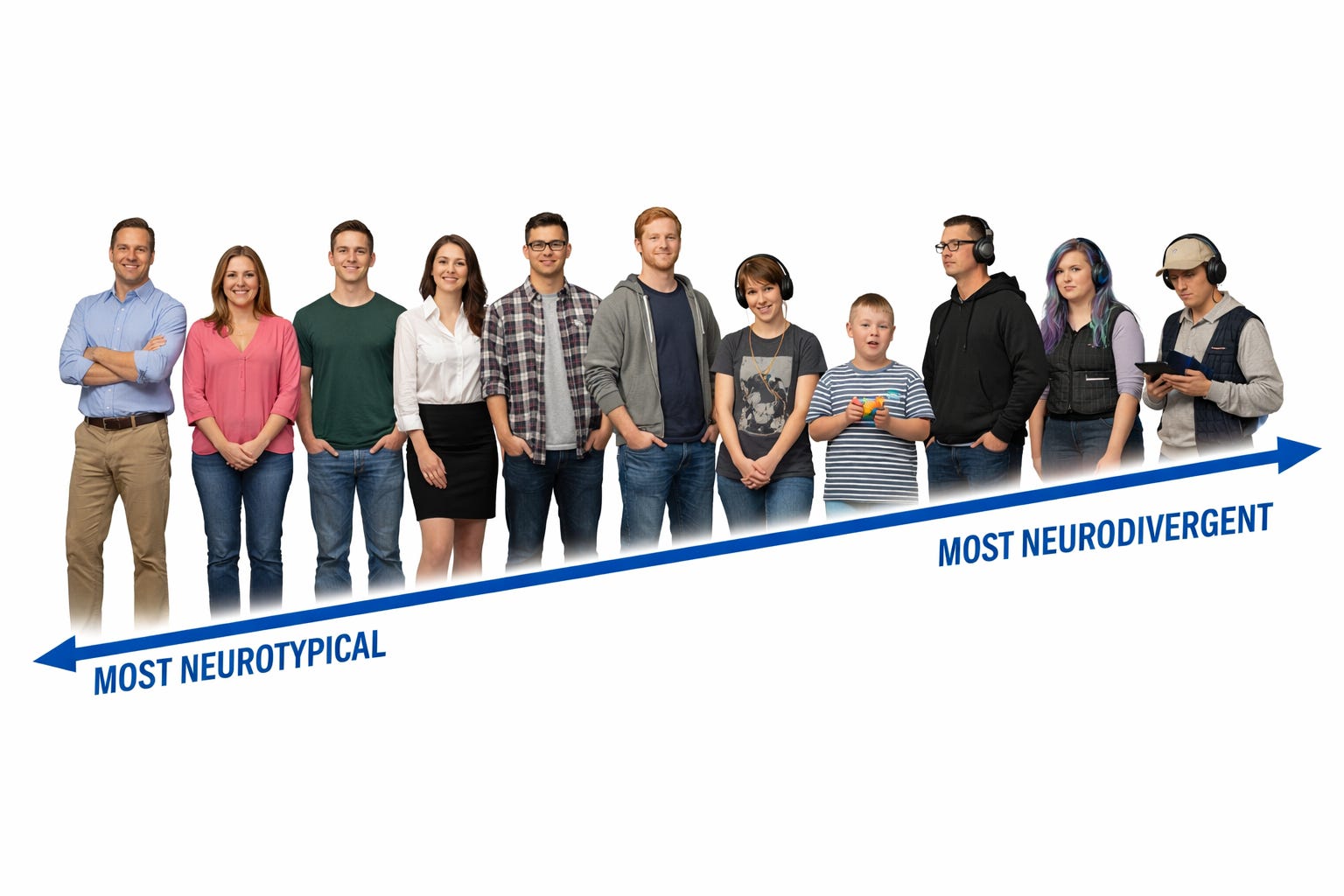
We asked AI, here’s what it came up with. It looks like dying your hair, avoiding eye contact, and wearing headphones means being most divergent. That’s also how Mattel dressed up “Autistic Barbie,” with things and gadgets to represent a piece of plastic that had no brain to indicate anything “neurologically” divergent from anything else.
For the purposes of this piece, we are going to look at the history of one of the more common labels applied to children from the mid-90s. Then it suddenly disappeared, which is one of the nice things about mental health disorders. When we change the way we think, or when they or society shift, they can magically disappear.
Why the Asperger Label Disappeared
The history of Hans Asperger is one of the most confronting reminders of how easily the language of helping can become entangled with systems of exclusion.
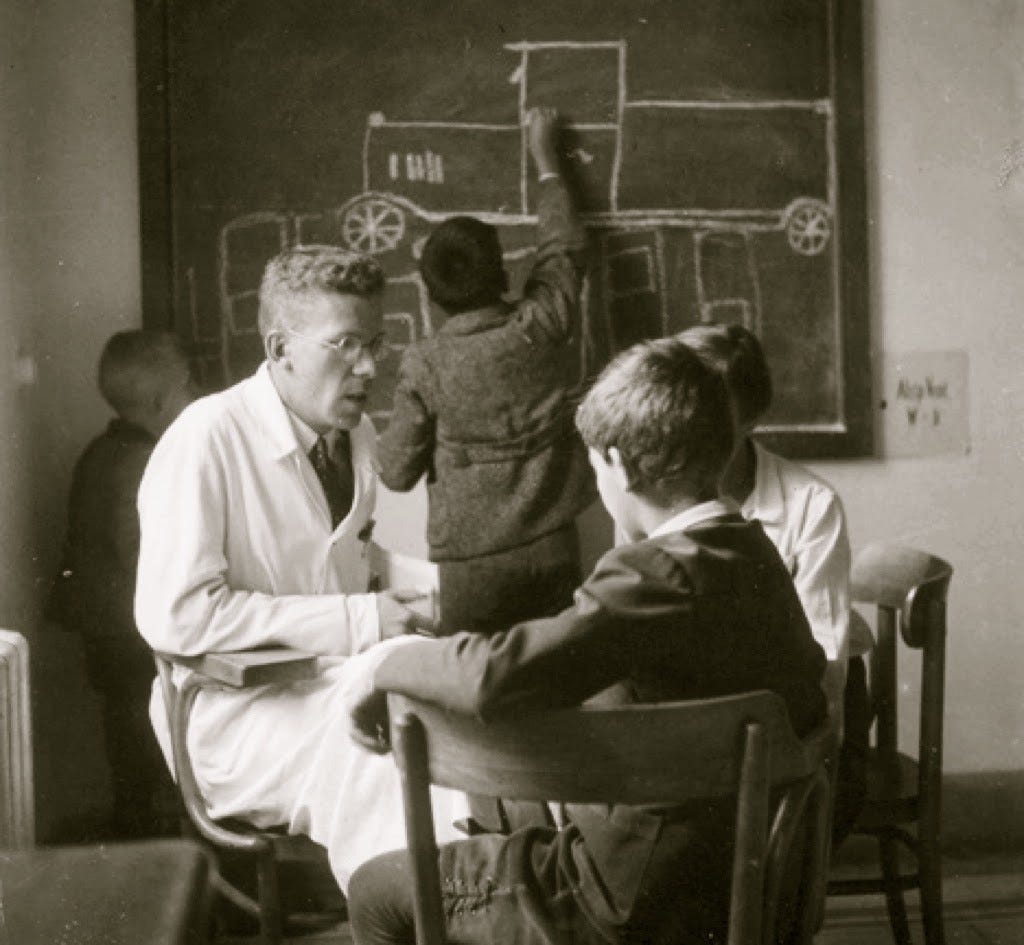
Asperger, an Austrian physician working in Vienna during the late 1930s and early 1940s, described a group of children he referred to as “autistic psychopaths.” Many of these children struggled profoundly with social relationships but demonstrated intense, highly focused interests and sometimes remarkable abilities in areas such as mathematics, music, or mechanical systems.
Asperger believed some of these children could thrive if they received the right educational support. According to an article in The Lancet, he described them as “absent-minded professors.”
His observations were later rediscovered and popularised in the 1980s by British psychiatrist Lorna Wing, who also introduced the term “Asperger’s syndrome” to a wider clinical audience. For many families, the label offered something meaningful: recognition. It suggested social differences did not necessarily mean a deficit.
For a while, “Asperger’s” became a kind of softer diagnostic category, often framed as a higher-functioning form of autism.
But this diagnostic language emerged from a deeply troubling historical context.
Darker Origins
During the period when Asperger was working in Vienna, Nazi ideology had already embedded itself into medicine and psychiatry. Classification was not simply a clinical activity; it was political. The Nazi project of “racial hygiene” depended heavily on categorising people according to perceived biological value: productive or burdensome (Arbeitsfähigkeit or economic usefulness), educable or uneducable (Bildungsfähigkeit), worthy or unworthy of life (Lebenswertigkeit).
Doctors were not peripheral to this system.
One of the darkest expressions of this ideology was the Nazi child euthanasia programme. Between 1940 and 1945, hundreds, if not thousands, of disabled children across the Third Reich were systematically murdered. The killing was often disguised as medical care. Increasing doses of sedatives, deliberate starvation, and lethal injections were common methods.
In Vienna, one of the main sites of these killings was the children’s ward at Am Spiegelgrund, part of the larger Steinhof psychiatric complex. Under the direction of physician Erwin Jekelius, hundreds of children died there alone. Official records frequently listed pneumonia as the cause of death. In reality, many of these children were deliberately sedated until they slipped into a coma and died.
For decades after the war, Asperger was portrayed as a quiet protector of disabled children. He was caricatured as someone who resisted Nazi ideology while working within the system. His reputation, at the time, had been cleaned.
Water Off the Doctor’s Back…
In the years after World War II, something rather telling happened in Austria and Germany. One of Europe’s most recognisable laundry detergents—Persil—lent its name to a darkly humorous term: the Persilschein, or “Persil certificate.” As Allied denazification policies attempted to remove Nazi collaborators from positions of influence, millions scrambled to “wash” their reputations clean.
People sought statements from neighbors, colleagues, and especially Jewish survivors who might attest to some moment of decency, however small, during the war. Many claimed they had quietly resisted the regime, or that they had been victims themselves, pressured by the Gestapo or blocked professionally for not fully embracing Nazi ideology. They insisted they weren’t the functionaries Primo Levi described: people who benefited simply from supporting those in power.
Those who succeeded in getting clean walked away officially certified as innocent. Scrubbed, so to speak, of their past. Even at the time, people recognised the absurdity of it all. The Persilschein became shorthand for the uncomfortable reality that reputations, like laundry, could sometimes be made to look cleaner than they really were.
More recent historical research has complicated that narrative.
In 2018, historian Herwig Czech published archival findings showing that Asperger participated in the bureaucratic machinery that identified children considered “uneducable.” As an expert assessor for youth welfare and medical authorities in Vienna, he evaluated children referred to his clinic and wrote reports recommending institutional placement.
Some of those referrals led directly to Spiegelgrund, where the Nazi’s child euthanasia program was taking place.
Herta Schreiber
One case involved a young girl named Herta Schreiber. After examining her in 1941, Asperger concluded that long-term placement at Spiegelgrund was “absolutely necessary.” She was admitted days later and died several weeks afterward.
She was three.
Here is a link to the below quote:
On 27 June 1941, Asperger assessed Herta at his clinic. In brief notes he wrote that 'At home the child must be an unbearable burden to her mother, who has to care for five healthy children.' Using the euphemistic language characteristic of German state documents of the period, Asperger wrote; 'Permanent placement at Spiegelgrund seems absolutely necessary.' A few days later, on 1 July, Herta was admitted to Spiegelgrund and on 2 September, a day after her third birthday, Herta died of 'pneumonia', the cause of death regularly induced at Spiegelgrund. Herta was not even afforded dignity in death; her brain was preserved and used for research alongside hundreds of organs of other Spiegelgrund victims. The hospital only released these for burial in 2002.
Other cases followed similar trajectories.
Perhaps most troubling was Asperger’s involvement in a 1942 assessment commission at the Gugging psychiatric facility outside Vienna. A group of practitioners reviewed dozens of children and categorised many as “uneducable.” Asperger was the only qualified clinician on this panel.
Several were later transferred to Spiegelgrund.
None survived.
To be clear, Asperger was not a senior architect of Nazi medicine. But neither was he the quiet resistor that post-war narratives sometimes portrayed. Like many professionals under authoritarian systems, he navigated the political landscape in ways that advanced his career while contributing (directly or indirectly) to harmful outcomes. That’s a true functionary, as Primo Levi would say.
Let’s Make that Story Go Away
These revelations reshaped how many people thought about the term “Asperger’s syndrome.” The label was removed from the fifth edition of the Diagnostic and Statistical Manual of Mental Disorders in 2013, when it was folded into the broader autism spectrum disorder.
The UK National Autism Society said the removal was due to the lack of utility of the term and “because of revelations about the Austrian psychiatrist Hans Asperger, who Asperger syndrome was named after and who was complicit with the Nazis.”
Yet the story raises a much larger question.
Diagnosis as Gatekeeper
What happens when diagnostic categories start to shape how we value or “treat” people?
In contemporary youth mental health, we often frame labels as tools for understanding. And sometimes they are. But labels also act as gatekeepers. They determine who receives support, who qualifies for services, and whose experiences are considered legitimate.
The moment we begin sorting people into categories (e.g., high-functioning, low-functioning, severe, mild), we also risk building hierarchies of worth.
The children who died at Spiegelgrund were not killed despite being categorised. In many cases, the categorisation itself made them vulnerable within a system already primed to judge human value.
Of course, today’s mental health systems are not Nazi Germany. The comparison should never be made lightly.
But history can still ask us difficult questions.
When we rely heavily on diagnostic labels, do we sometimes overlook the person behind them?
When support is tied to categories, do we inadvertently reinforce the idea that people must prove impairment in order to receive care?
These are uncomfortable questions (important unscripted questions). They are worth sitting with. Why would we still use terminology tied directly to the Nazi’s, such as anything related to “autistic psychopaths” and use it to raise awareness through a Barbie?
Perhaps the deeper lesson from Vienna is not that diagnosis itself is wrong. Rather, it is a reminder that human beings are always more complex than the categories we create to describe them.
If there is a way forward, it may lie in shifting our focus from classification to connection and democracy. We do not need to draw a line between who is typical and who is divergent. If anything, that line will only be constructed by those who want the power to divide the people.
So the question remains: Are we genuinely learning from history, or are we simply refining vocabulary in order to continue sorting one another?
 | A guest post by
|
This really connects with something I have been thinking about the last day and outlining a writing about. Have we traded the “super predator” from the crack epidemic to Reactive Attachment Disorder? I don’t think comparing RAD discourse to the “super predator” era is not rhetorical exaggeration.Both involve:- Fear-based narratives about dangerous youth- Overreliance on deterministic labels- Policy and practice responses that prioritize control over care- Structural inequities affecting marginalized children- Long-term consequences for liberty, safety, and belonging
Its such an awful, reductionist, but profitable mess and useful for maintaining a toxic status quo -Edith Sheffer Aspergers Children is a good book on all of this - you might enjoy some Jonny Fluffypunk https://www.youtube.com/watch?v=HAgBvfArLxU and I have to agree with this in relation to the mass labelling and drugging of children with ZERO informed consent and so much harm https://connect.springerpub.com/content/sgrehpp/19/1/65