Swimming with Thoreau
Why “living deliberately” still hits and the quiet rebellion that never really stopped.

Disclaimer: I hate school, but I love amazing teachers
I’m a boarding school kid. I grew up going to summer camp in Vermont starting at age 8, and when the school counselor asked what I wanted to do in high school, I had no idea. I was already stealing my dad’s cigarettes and would do anything to just play music and wag classes.
“Have you thought about boarding school?” she asked.
“You mean I can leave my home and spend every day like summer camp?”
I didn’t think twice.
My father, now absent from our family and wrecking his own life, had no say. My mother was on board. We decided to visit a few schools, so we flew from Maryland to Boston.
I chose a school in central Massachusetts. The people seemed nice, and the ice hockey and music programs were pretty cool.
It took me only a few months to be introduced to marijuana and remind myself of what I knew from kindergarten: school sucks.
Education rules. School? Meh…
I loved the nature, the snow, and the mountains of New England. I had fun with the people…for the most part. There were, of course, the normal issues that come with living with other students.
But hey, I was a good musician, and loved having fun whenever I wanted.
I did get stuck in detention every Saturday night for my bad grades and skipping class. I didn’t really care. I was also in therapy with a wonderful school counselor, whom I think I’d reach out to after writing this.
And even though I went back for my ten-year high school reunion with lovely people I still consider friends (though we aren’t as close as we should be)… looking at you, Keenan & Sean… school still sucks.
And yes, I was expelled from boarding school…twice.
Talked my way back in. And then I only lasted 20 or so days before being politely asked to leave…again.
But this piece is about Thoreau, and what I learned about Thoreau…one amazing teacher was worth it.
Right, mom?!

My Introduction to Thoreau
My English teacher in 11th grade was Dr. Susie Carlisle. As above, I didn’t care about class.
I remain a painfully slow reader, and as a kid, I hated reading. But then we all got a copy of Walden. Dr. Carlisle booked us on a field trip down the road to visit Walden Pond.
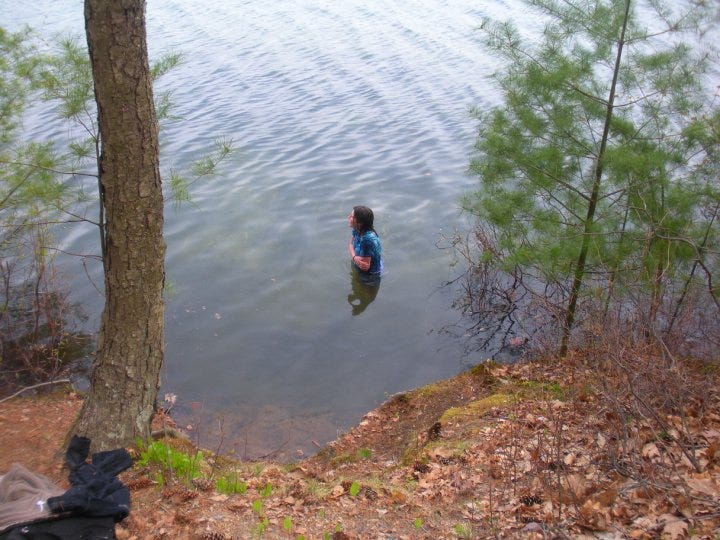
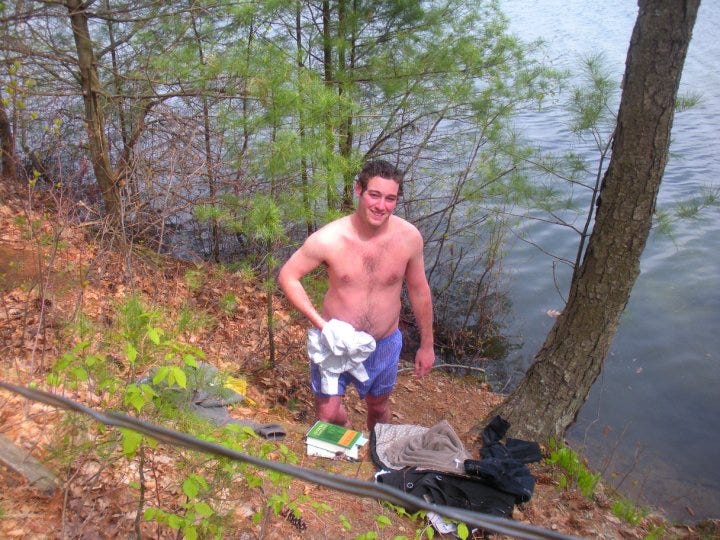
We explored the mocked re-make of Thoreau’s famous cabin (and yes, I quickly got down to my undies to swim in the crystal clear waters of this spectacular water…probably got in trouble for that too, I was 16, who cares).
The assignment for this class was to create something that creatively embodies Thoreau. Being a skateboard kid used to making half-assed skateboard videos, I got a camcorder and took my friends to the woods. We skipped class, climbed mountains, cliff jumped, and just hung out in the woods. I filmed it all.
Using early-2000s technology (which, yes, was awesome no matter how you feel about modern times), I put together a “skate video” with an AFI song and had a friend read a few passages from Walden over the top.
Dr. Carlisle shared it with the whole class. I got an A+. The last one I’d ever get during high school. And the only one. Yet maybe the most meaningful one.
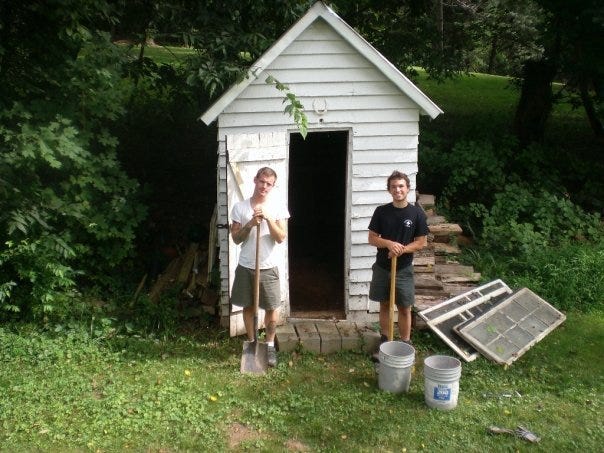
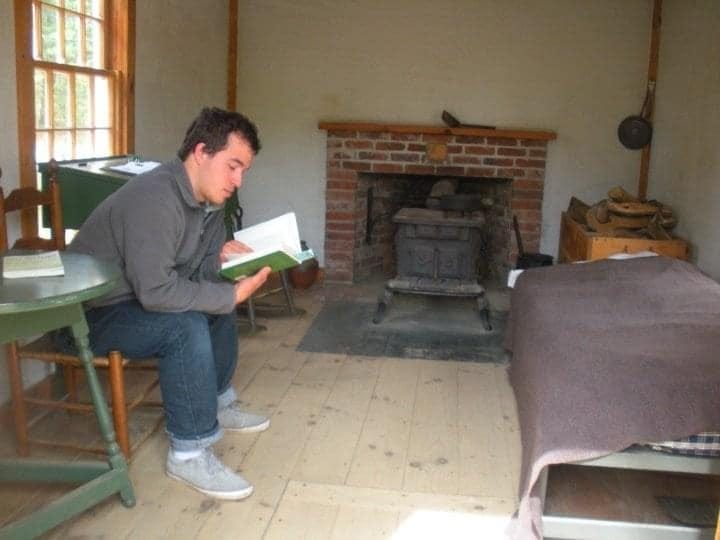
I emailed Dr. Carlisle years ago and sent her the picture of my attempt at a Thoreau cabin (the first picture in this piece). She had told us she had built one of her own while we were her students in high school. She told me she printed the picture and framed it on her desk.
A picture of the kid kicked out of school twice.
Thoreau Returns
After scraping my way out of high school, I knew I wanted to turn my life around. I couldn’t become my absent father, or worse, my so-wonderful, driven, and caring mother.
No one wants to become their mother. That would be the worst.
And I probably did. Yikes.
I wanted to help people.
Shit. That’s what she does!
While I was navigating community college, I began volunteering as a firefighter with the Rockville and West Lanham Hills Fire Departments in Maryland. I started getting jobs in the outdoors. I also worked at a skateboard store that later became Lululemon, where the Lululemon Murder took place. Talk about a weird story.
At all the outdoor programs, people shared quotes about Thoreau. I bought myself a new copy of Walden. I read it again. Understood about 30% more of it. I was becoming a vegetarian (meeting Renee…see below…changed that) and liked those parts, and found some passages (like the one below) that made me really question how power corrupts people and institutions.
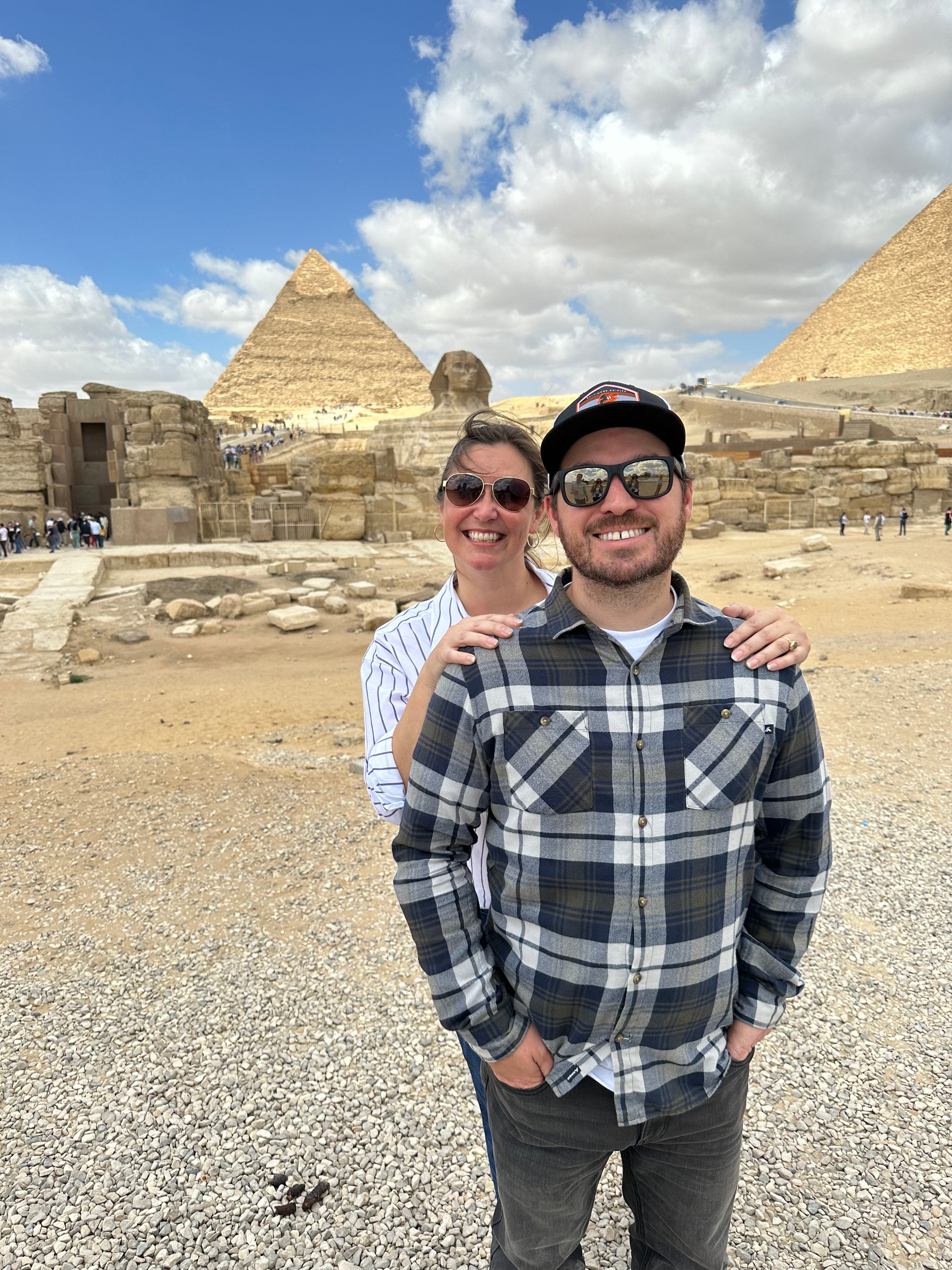
As for the Pyramids, there is nothing to wonder at in them so much as the fact that so many men could be found degraded enough to spend their lives constructing a tomb for some ambitious booby, whom it would have been wiser and manlier to have drowned in the Nile, and then given his body to the dogs. I might possibly invent some excuse for them and him, but I have no time for it. –Thoreau
As a young punk, I thought Thoreau had all the answers. I enjoyed Emerson’s writings, too, but they were too nice. A bit too passive for me, for some reason. Thoreau had the attitude of teenage angst, with artful writing. Civil disobedience resonated with me. I wanted to live like that.
Living in a Shed
In the late 2000s, I thought I would try to live in a tent for an entire year. My girlfriend at the time was less than impressed. After all, I was working in the wilderness on long expeditions, and our lives were drifting apart. I made it to April in a tent, however.
A solid effort!
While working to grow an intensive outpatient and aftercare program in Darnestown, Maryland, all of us outdoor weirdos would live at the house where we ran this practice. We’d spend all night up with the clinical director learning about psychotherapy and social work before crashing on the floor. We were sponges soaking up any knowledge we could. There was no complaining.
In the backyard was a decrepit shed. We had hired another dude from a Maryland hardcore band named Chad, and we had a cunning plan to pull a Thoreau and turn this into a cabin for us to live in at our workplace.
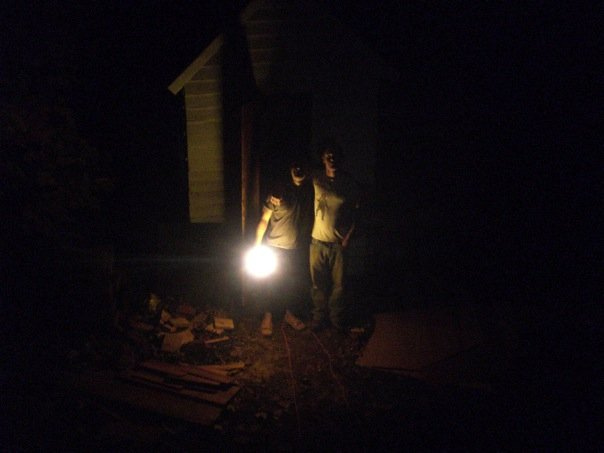
Chad had all the handy skills. Though my father was a super-skilled carpenter, I can barely hammer a nail. We milled our own number 2 pine and put this together. Eventually, we added a small potbelly stove that would go out every few hours, leaving us freezing as we slept in hammocks.
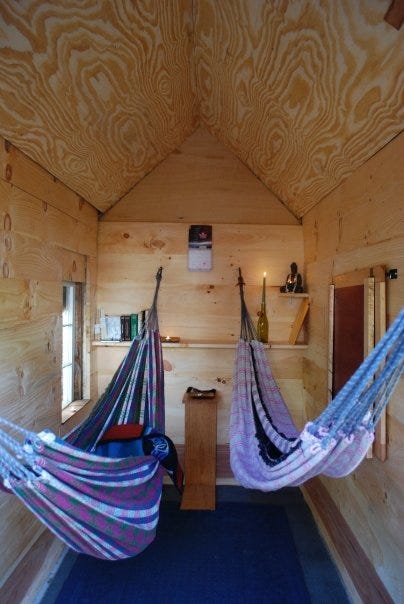
Chad also put in a desk made from purple wood on hinges, so we could work and I could do my university studies. We were set up.
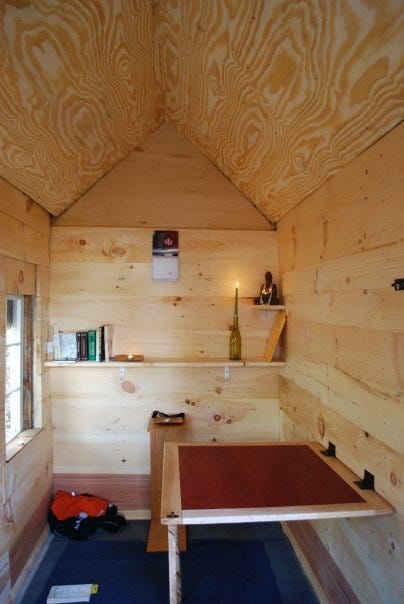
Those nights are the most memorable of my undergraduate studies. We were doing the “performance” of our heroes while wrestling with their ideas. How special.
My Next Chapter of Thoreau
If you’ve read even this far, you’ll see that, besides calling someone an “ambitious booby,” I have not talked about a single thing Thoreau wrote or stood for besides civil disobedience or pretending to live in a cabin.
When I met Renée…on a ship in Alaska…I knew my life was about to change. She’s Australian, and she captured my heart. I was a broke college student living in…a shed (That’s a fantastic story for another day).
After I traveled to adventure with Renée in Australia, she came to visit in the Fall of 2009. Yes, we went to Walden Pond.
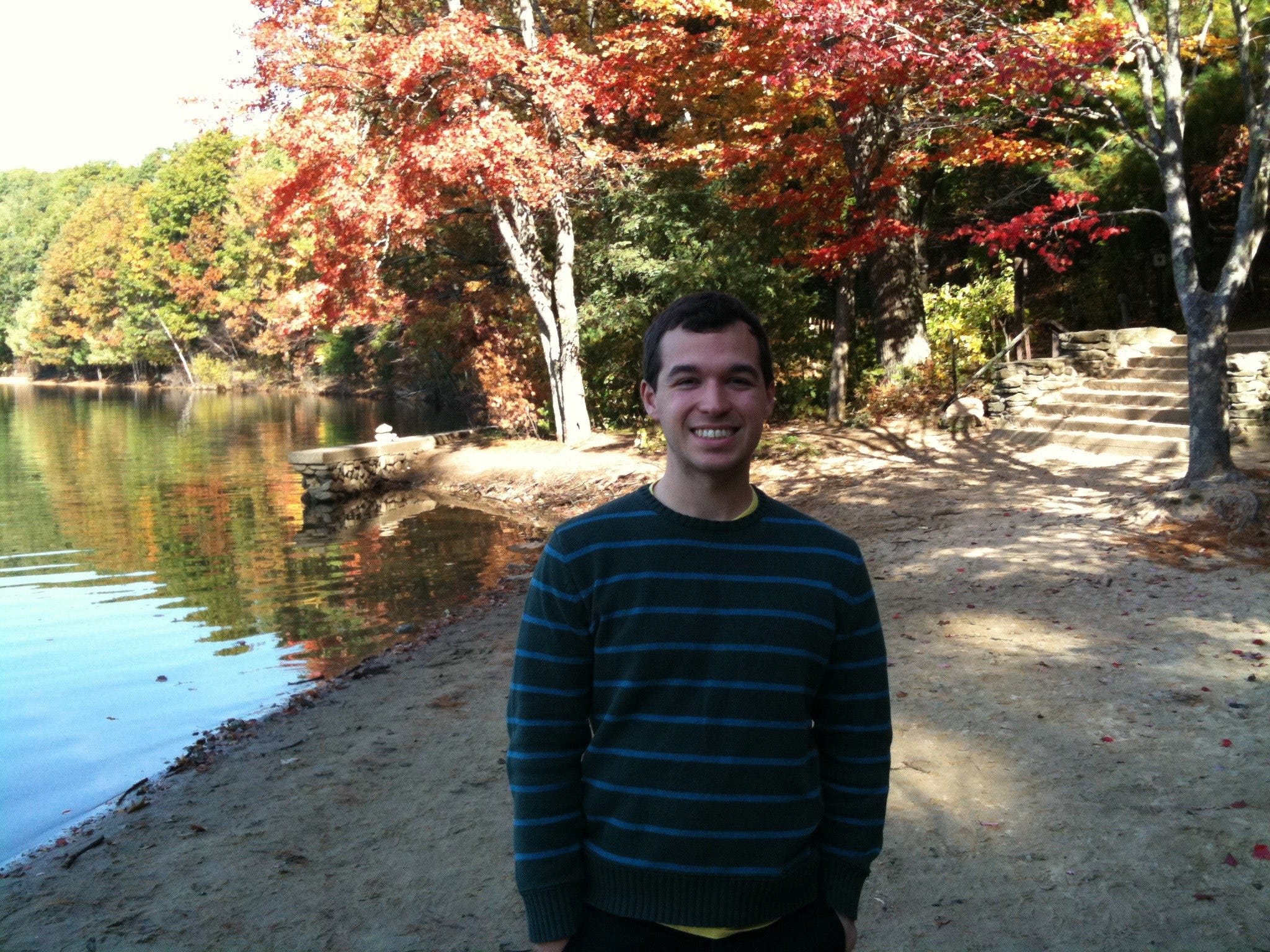
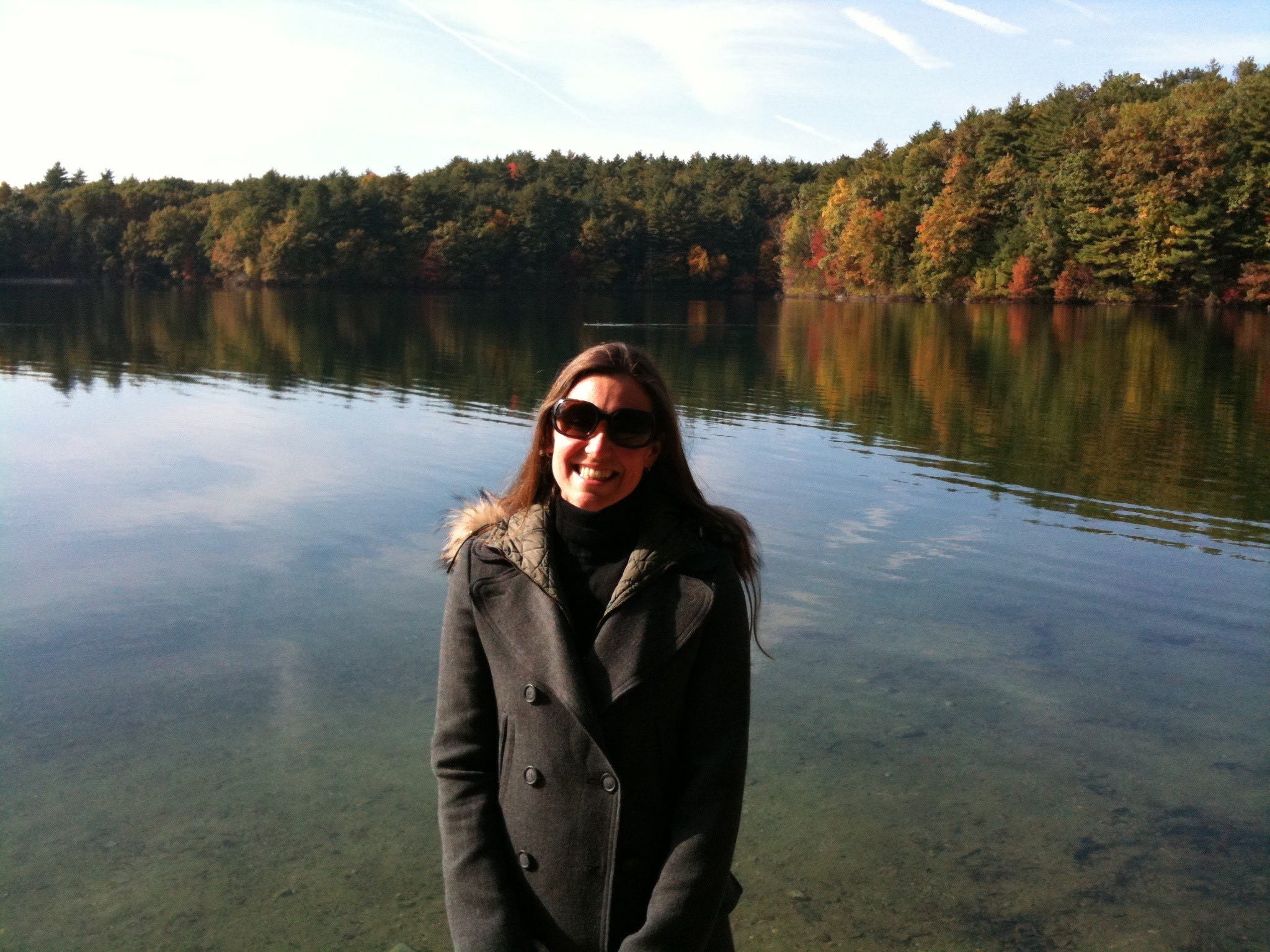
So basically, every important moment in my life is tied to Thoreau. Which I stubbornly made happen.
As some of you will know, at the end of my doctoral research, I became (and remain) engrossed with Jane Addams, the mother of professional social work, William James, and John Dewey. I am fascinated by how their work was eclipsed by the medical, linear explanations of human experience and the bastardization of democracy. Not to mention the institutionalization of democracy.
Ok, now I sound a bit more like Thoreau.
Why Thoreau Today
Recently, I’ve been chasing (backslash stalking) American philosopher John Kaag for a conversation about these heroes of American philosophy. Kaag wrote a great book, Hiking with Nietzsche: On Becoming Who You Are, and it inspired me to think about my swims with Thoreau. I’ve loved watching Kaag’s lectures and interviews recently, and they’ve changed my perspective on academia.
As I read his work on William James, I increasingly came to believe that there are characters far more important to psychology and psychotherapy than the long-trodden heroes like Freud. James, by the way, was far more interested in Jung than Freud, and I believe ideas like James’ stream of consciousness are way more aligned with Carl Rogers’ humanism than we think. And way, way, way more ahead of their time. I also think forgetting Jane Addams and John Dewey is a huge mistake.
The Self is Not a Passive Spectator but an Active Participant
Henry David Thoreau held a distinctive place in the intellectual formation of William James, largely as a living embodiment of American Transcendentalism, the mid-nineteenth-century movement attempting to prize intuition, self-reliance, and an unmediated encounter with nature over inherited dogma or institutional authority.
Preach.
Founded in the circle around Ralph Waldo Emerson, Transcendentalism strived to reject the materialism and conformity of industrial America, insisting instead that every individual could access universal truths through personal experience and the “original relation to the universe.” Thoreau, Emerson’s kind of disciple, radicalized these ideas in practice through his brief experiment in a cabin two miles out of Concord, Mass.
The James family was intimately tied to this world. Henry James Sr. absorbed Transcendentalism’s core conviction that truth is not abstract but lived. Although James would later temper his romantic idealism with empirical psychology and pragmatism, he never lost the Transcendentalist insight that the self is not a passive spectator but an active participant in reality, capable of reshaping its world through deliberate choice and attention.
What made Thoreau especially important to James was the way he modeled a philosophy forged through lived experience and natural observation. The insistence on “living deliberately” and trusting the regenerative power of direct experience helped James articulate his doctrine of the will to believe and his later psychology of “the energies of men” - the idea that human beings possess hidden reserves of vitality that can be summoned by resolute action. In this sense, Thoreau served James as a proof that the life of the mind need not float above the world but could be tested and renewed by immersion in it.
Get to work.
What a Life Might Look Like if Lived on Purpose
The result was a distinctively American lineage in which Transcendentalist self-trust evolved into pragmatic idealism, carrying Thoreau’s insistence on authenticity into the turbulent search for meaning.
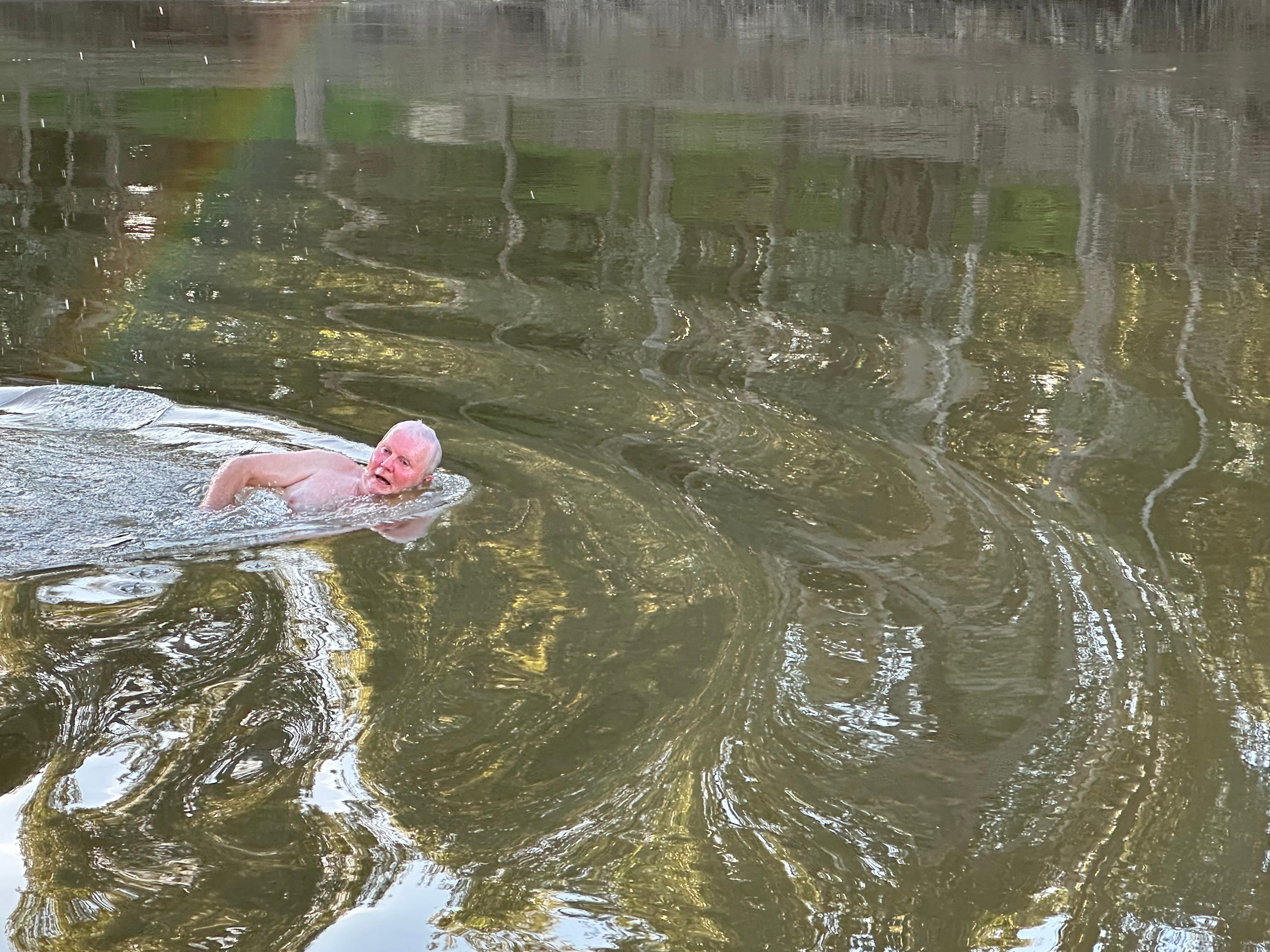
Thoreau has followed me around in the way certain ideas do. He showed up when I was a kid pushing against the edges of a boarding school system that never quite fit, again when I was a broke university student crashing in a backyard shed, and later, more tenderly, when I found myself standing on the shores of Walden Pond, falling in love and trying to make sense of what a life might look like if lived on purpose.
And the learning of John Kaag’s work brought me back.
What started as a half-hearted high school assignment became something closer to a lifelong conversation. A low-grade rebellion against the neat categories and expectations handed down by institutions, and a stubborn, sometimes inconvenient belief that a simpler, more deliberate way of being is still within reach.
Thoreau never handed me answers. He sharpened the questions and dared me to try and live into them, however clumsily. Whether I was jumping off cliffs with friends, piecing together rough skate films, playing music, or building a cabin with Chad, before later bringing my life partner Renée to those same waters while we do our own living deliberately, he’s felt less like a distant literary figure and more like a steady companion in the ongoing, messy work of trying to live honestly.
These days, as I find myself deep in the writings of James, Addams, and Dewey, I’m starting to see Thoreau differently. Not as an isolated eccentric retreating to the woods, but as a kind of force in a broader American tradition that insists philosophy belongs in lived experience. You can trace that thread forward: from intuition and self-reliance into a more grounded concern with attention, habit, and the untapped “energies” people carry within them.
It’s a lineage that feels especially relevant now.
We’re surrounded by noise, by systems that demand compliance, by a kind of hollow authority often mistaking control for wisdom. Against that backdrop, the insistence on living deliberately…on questioning the motives of those building monuments to themselves…lands with renewed weight.
What matters, and what continues to shape my own work, is the idea that philosophy isn’t something you simply study at a distance. It’s something you test, embody, and revise in real time. It’s there in how we heal, how we educate, and how we help others find their way back to something resembling a life that feels like their own.
Thoreau gave me permission to at least try to engage with life directly rather than sit it out. Yes, I’ll get that wrong sometimes. But an experiment never fails if it’s really a test and not some vanity project. And that framing has stuck.
In Kids These Days, Nevin J. Harper and I wrote about treating teens as crew, not passengers. An adage from one of Outward Bound’s founders, Kurt Hahn.
I carry that influence with me, not as a romantic ideal but as something far more practical. A reminder, really, that the most meaningful forms of education rarely happen where we’re told they should. And that, if we’re paying attention, there’s still plenty to learn just beyond the edges.
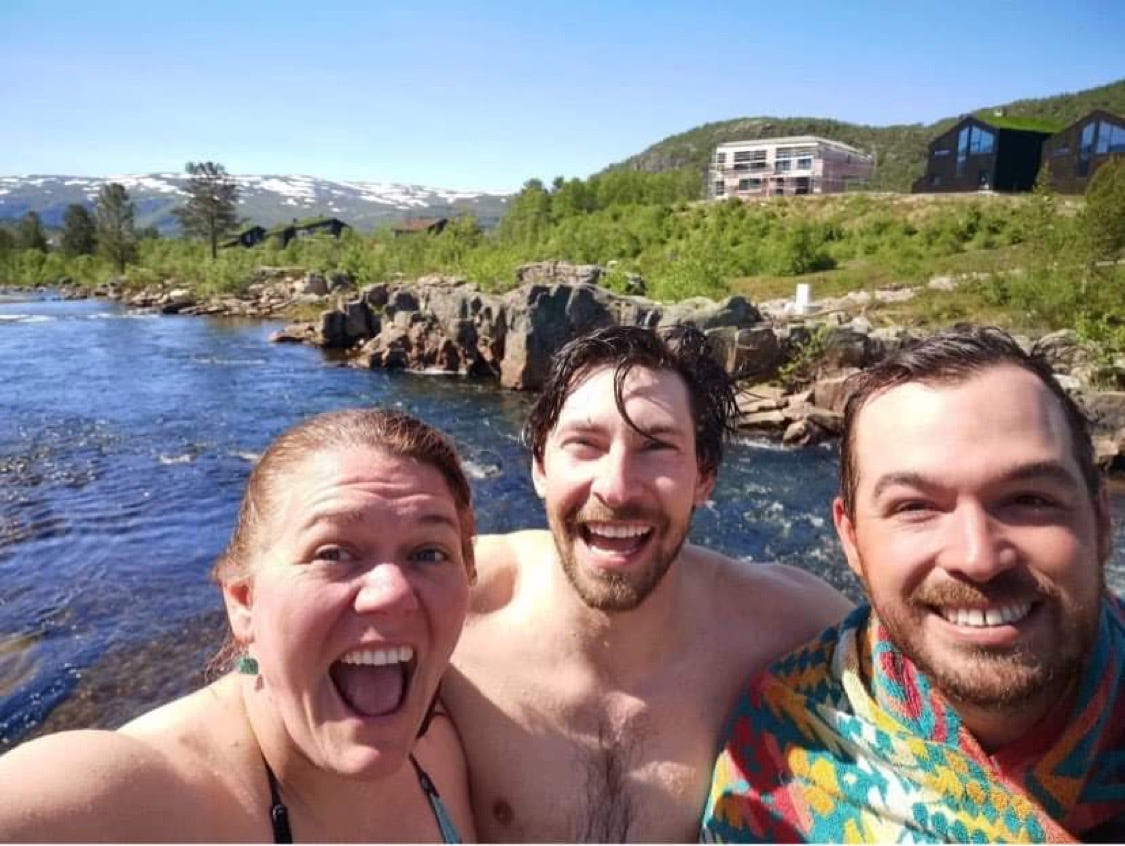
We can always go swimming at “our” Walden with friends, young and old. At any time. Who knows what you’ll learn?
You might find Walden Two by B.F. Skinner (1948) interesting